


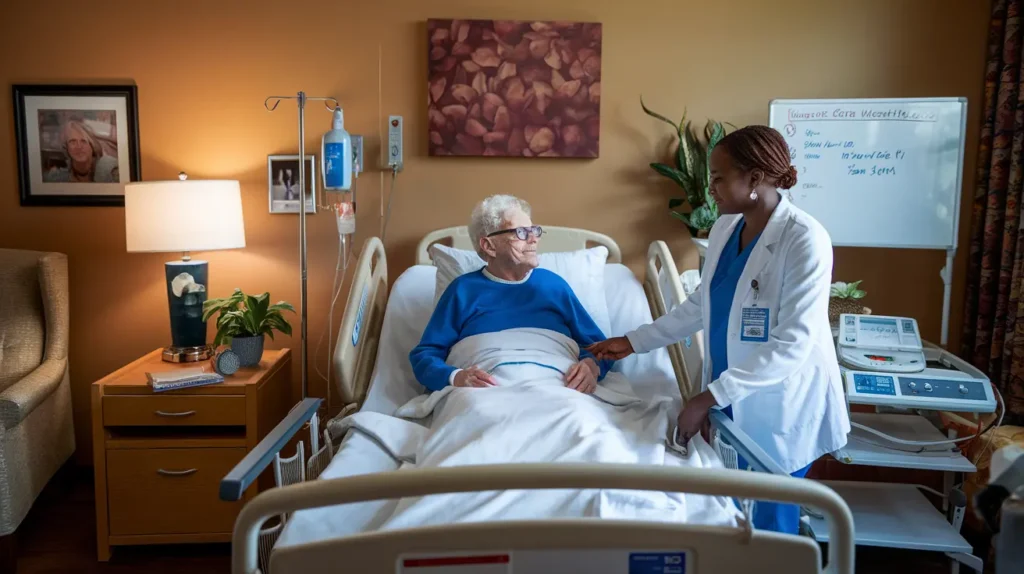
When a loved one already lives in a nursing home and their illness advances, hospice can be added without a move. The hospice team works alongside the facility staff, bringing end-of-life expertise into the place the patient already knows. This guide explains how the two services fit together and what families should ask.

How hospice differs from standard nursing home care
Nursing homes provide daily care, meals, supervision, and medical services for people who can no longer live on their own. Hospice adds a different layer. It focuses on comfort at the end of life: pain and symptom control, emotional and spiritual support, and guidance for the family. The two services run at the same time, with different jobs.
What hospice adds in a nursing home
- Pain and symptom management. The hospice team watches for pain, breathlessness, nausea, and anxiety, and adjusts medications and care to keep the patient comfortable.
- Emotional support. Patients and families get support through the hard parts of the process, including the days after a death.
- Spiritual care. A chaplain is available for patients and families who want that support, shaped by the patient’s own beliefs.
- Bereavement support. Hospice continues to support the family after the patient dies. At Siena Hospice, bereavement support runs for 13 months, with calls and mailings, and longer on request.
How the two teams work together
When a nursing home resident becomes eligible for hospice, the hospice provider and the facility build one plan of care together. The facility staff continue the daily care they already provide. The hospice team visits regularly, directs the comfort-focused parts of the plan, and stays in contact with facility staff and the family as the patient’s condition changes.
The hospice side of the team includes nurses, aides, a social worker, and a chaplain, with physician oversight. Nurses manage symptoms and medications. Aides help with personal care such as bathing and grooming. The social worker supports the family and works through advance care planning. The chaplain offers spiritual care for those who want it.
Benefits families usually notice
More attention to comfort. Hospice teams specialize in pain relief and symptom control, and they reassess often as the illness progresses.
A plan built around the patient. Visit patterns, medications, and support are set by the patient’s needs and wishes, and reviewed with the family.
Support for the family, not just the patient. Education about what to expect, regular updates, and bereavement support after the death are all part of the service.
Fewer disruptive transfers. With hospice coordinating care inside the facility, many crises can be handled in place instead of with a trip to the emergency room.
Questions to ask when choosing
- Which hospice providers serve this facility, and how often do they visit?
- How do hospice staff and facility staff communicate with each other, and with the family?
- Who does the family call at night or on a weekend?
- How are pain and sudden symptoms handled between visits?
- What does the facility’s approach to end-of-life care look like day to day?
Common concerns
Can my loved one keep their own doctor? Yes. A patient in a nursing home can keep their primary physician, who can stay involved alongside the hospice team.
Will my loved one have to move? No. Hospice comes to the patient. If the patient already lives in a nursing home, care is provided there.
Is hospice only for the last few days? No. Hospice is for people with a life expectancy of six months or less if the disease follows its usual course. Many patients receive hospice for months, and starting earlier usually means more support for both patient and family.
Siena Hospice provides hospice care in nursing facilities across Las Vegas, Henderson, Summerlin, North Las Vegas, Boulder City, and Pahrump. If your loved one lives in a nursing home and you are wondering whether hospice fits, call us at 702-389-2009. Our phones are answered around the clock, with an on-call nurse available.